

The Carb-Craving Rollercoaster: How it Affects Your Health and how to Break the Cycle
You eat a bowl of oatmeal or granola at 8 a.m. and feel fine. By 10:30 you are tired, a little foggy, and thinking about a snack. By noon you are starving. If that sounds familiar, you may be riding what this article calls the blood sugar roller coaster: a pattern in which rapidly digested carbohydrates cause blood sugar to spike and then drop, leaving you hungry again sooner than you expected.
A note on terms: this is not "carb cycling," the fitness practice of deliberately alternating high-carb and low-carb days. Here we mean the unplanned ups and downs that can follow a meal.
This article explains how the pattern works, what it may mean for your health over time, which foods are the biggest drivers (some of them surprising), and practical ways to smooth it out.
How the cycle works
When you eat carbohydrates, your digestive system breaks them down into glucose, which enters your bloodstream. In response, your pancreas releases insulin, a hormone that helps move glucose into your cells for energy or storage.
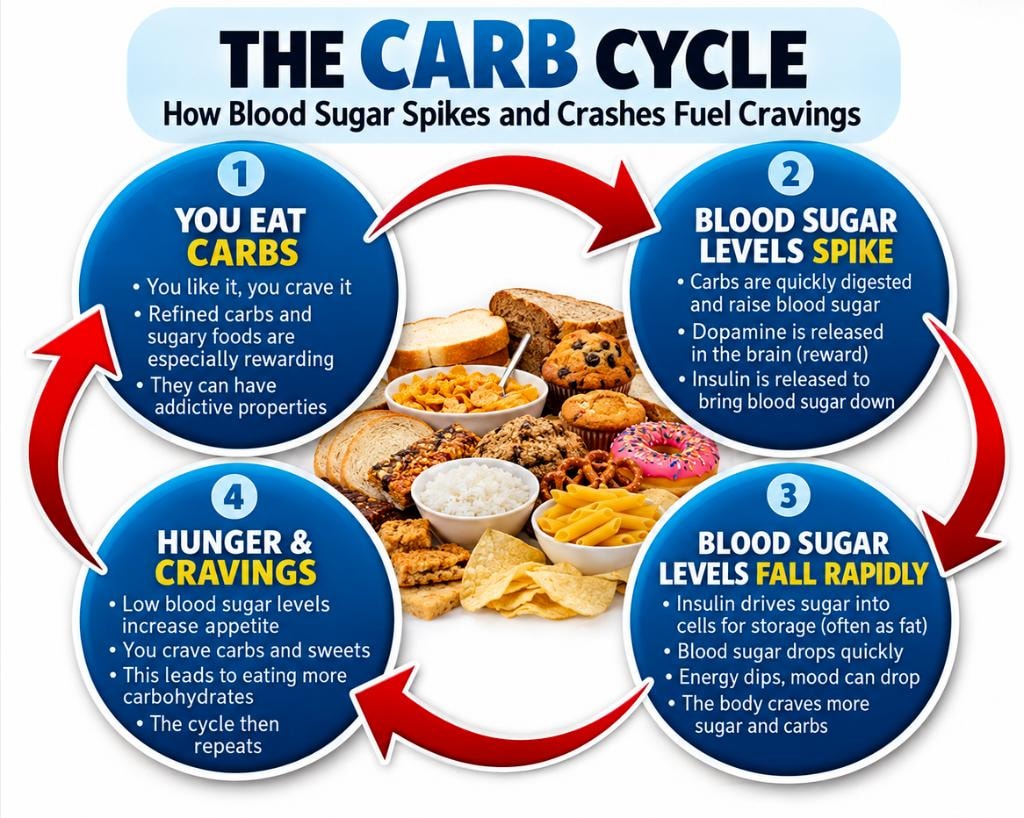
The speed matters. Fiber-rich, minimally processed carbohydrates are digested slowly, so glucose enters the blood gradually and insulin rises gently. Refined grains, sugary drinks, and sweets are digested quickly, producing a sharp rise in blood sugar and a strong insulin response. For some people, blood sugar then falls quickly, which can contribute to hunger, cravings, and the urge to eat again. Responses vary from person to person, and researchers are still working out how strongly these swings drive appetite, but the pattern is common enough to be worth understanding.
Glycemic index and glycemic load
Two measures help explain why some carbohydrates behave differently from others.
Glycemic index (GI) ranks foods from 0 to 100 by how quickly they raise blood sugar compared with pure glucose. Foods with a GI of 55 or below are generally considered low, and 70 or above high.
Glycemic load (GL) accounts for portion size as well as speed. A food can have a high GI but a modest GL if a typical serving contains few carbohydrates. Watermelon is the classic example. Generally, a GL of 10 or below is considered low and 20 or above is high.
Neither number is perfect. Values vary by brand, ripeness, preparation, and what else is on the plate, and individual responses differ. Still, they are useful for comparing foods. Harvard Health Publishing maintains a searchable glycemic index and load list for about 100 common foods (see Sources).
Eating patterns associated with these swings
Diets high in refined carbohydrates and added sugars have been associated with the following over time. Most of these outcomes stem from overall diet quality, excess calories, and body weight rather than from blood sugar swings alone.
1. Increased hunger and cravings: Rapid changes in blood sugar may stimulate appetite and encourage overeating.
2. Energy fluctuations: Blood sugar swings can contribute to fatigue, sluggishness, irritability, and difficulty concentrating.
3. Weight gain: Frequent overeating can increase body fat, particularly around the abdomen.
4. Insulin resistance: Excess body fat and other metabolic factors can impair the body's ability to respond effectively to insulin.
5. Type 2 diabetes: Insulin resistance and persistently elevated blood sugar increase diabetes risk.
6. Fatty liver disease: Excess calorie consumption, particularly from added sugars, can promote fat accumulation in the liver.
7. Cardiovascular disease: Diets high in added sugars and refined carbohydrates may contribute to elevated triglycerides and increased heart disease risk.
8. Metabolic syndrome: A cluster of conditions, including abdominal obesity, high blood pressure, abnormal cholesterol or triglycerides, and elevated blood sugar, that raises the risk of heart disease and diabetes.
9. Dental decay: Frequent consumption of fermentable carbohydrates, especially sugars, promotes cavities. This is driven mainly by how often sugar reaches your teeth, not by blood sugar itself.
Not everyone who eats these foods will develop these conditions. Genetics, activity level, sleep, body weight, and overall diet all play a part, and the research on glycemic index and long-term outcomes is not entirely consistent.
What about whole grains?
Whole grains are generally linked with better health than refined grains, and they deserve a place in a healthy diet. But the label can mislead.
When grain is milled into fine flour, the structure that slows digestion is largely destroyed, even if the bran and germ are kept. As a result, some whole-grain foods, particularly finely milled whole-wheat bread, can raise blood sugar almost as much as refined grains. Published GI values for whole-wheat bread are often in the high 60s to low 70s, not far below white bread, which is typically around 70 to 75.
Intact or minimally processed grains, such as steel-cut oats, barley, quinoa, and whole-wheat pasta cooked al dente, generally produce a slower response. Dense, coarse breads with visible whole kernels tend to do better than soft, uniform sandwich bread. In short, not all carbohydrates affect blood sugar equally, and a whole-grain label does not guarantee a low glycemic impact.
What about fruit?
Fruit raises blood sugar because it contains natural sugars, primarily fructose, glucose, and sucrose. But whole fruit comes packaged with fiber, water, vitamins, and antioxidants that slow sugar absorption and provide real health benefits. Whole fruit also fills you up in a way juice does not.
Fruits differ. Berries, apples, pears, cherries, and citrus fruits generally have a lower glycemic impact, while ripe bananas, pineapple, and large portions of grapes may produce a greater rise. Dried fruit and fruit juice deliver concentrated sugar with little of the fiber that tempers it, especially in large amounts.
Fruit can contribute to blood sugar fluctuations, especially in people with insulin resistance or diabetes. Choosing whole fruits, moderating portions, and pairing them with protein or healthy fats can help keep blood sugar steadier.
Did the Low-Fat Movement Get It Wrong?
Beginning in the late 1970s, Americans were encouraged to reduce dietary fat to improve their health. Unfortunately, many processed foods marketed as "low-fat" replaced fat with refined carbohydrates and added sugars. Over the following decades, obesity and type 2 diabetes rates climbed dramatically. While several factors contributed to these epidemics, the experience exposed an important flaw in the low-fat message: reducing fat does not automatically make a diet healthier. Today, research increasingly emphasizes the importance of food quality, metabolic health, and individualized carbohydrate intake rather than simply labeling foods as low-fat or high-carb.
Carbohydrates and type 2 diabetes
There is no single best carbohydrate target for everyone with type 2 diabetes. The American Diabetes Association's consensus report on nutrition therapy recognizes several eating patterns as reasonable options, including Mediterranean, plant-based, low-carbohydrate, and lower-glycemic-index approaches, and emphasizes individualizing the plan to a person's health, preferences, and goals. Some studies find that lower-carbohydrate diets produce greater short-term improvements in blood sugar, though differences between approaches often shrink over a year or longer. Higher-carbohydrate, plant-based patterns built on whole, high-fiber foods have also improved blood sugar control and insulin sensitivity in some research. How a person responds depends on their degree of insulin resistance, medications, and how well they can sustain the plan.
Important safety note: If you take insulin, a sulfonylurea, or an SGLT2 inhibitor, do not sharply cut carbohydrates without talking to your healthcare provider first. Reducing carbs while on these medications can cause dangerously low blood sugar (hypoglycemia), and SGLT2 inhibitors carry a risk of ketoacidosis, particularly on very-low-carbohydrate diets. Medication doses often need to be adjusted when diet changes.
What matters most is whether an approach improves blood sugar control, insulin sensitivity, and overall metabolic health for you, and that is best worked out with your care team.
Breaking the cycle
To smooth out the swings, reduce added sugars and rapidly digested carbohydrates, including some finely milled whole-grain products. Focus on whole, minimally processed foods rich in protein, healthy fats, and fiber to help stabilize blood sugar, control hunger, and reduce cravings. Here is why each habit helps:
Pair carbohydrates with protein, fat, or fiber. Eating them together slows digestion, so glucose enters the blood more gradually.
Eat vegetables or protein first. Some small studies suggest that eating carbohydrates last in a meal can reduce the post-meal glucose rise.
Choose whole over processed. The less a food has been ground, puffed, or refined, the slower it tends to digest.
Move after meals. Even a 10 to 15 minute walk helps your muscles take up glucose.
Sleep enough. Poor sleep can worsen insulin sensitivity and increase appetite.
Be mindful of constant grazing. Evidence on meal frequency and metabolic health is mixed, so there is no need to count meals. But for teeth, frequent snacking on sugary or starchy foods keeps sugar in contact with enamel.
Exercise regularly. Physical activity improves how your body responds to insulin.
Here is what those principles look like on your plate.
Simple swaps
Small changes often work better than overhauling your whole diet.
Instead of sweetened cereal or a bagel, try plain Greek yogurt (or unsweetened soy yogurt) with berries and nuts, or eggs (or a tofu scramble) with vegetables.
Instead of fruit juice, eat the whole fruit.
Instead of soft sandwich bread, choose dense, coarse whole-grain bread, or use lettuce wraps or a smaller portion.
Instead of white rice, try lentils, beans, quinoa, or barley, or mix them with a smaller serving of rice.
Instead of chips or crackers, try nuts, hummus with vegetables, or air-popped popcorn in moderation. Cheese works too if you eat dairy.
Instead of soda or sweetened coffee drinks, choose water, sparkling water, or unsweetened tea or coffee.
A sample day
This is an illustration, not a prescription. Portions and food choices should reflect your individual nutritional needs, health goals, dietary preferences, and any allergies. The sample includes nuts, fish, soy, and eggs, so substitute as needed.
Breakfast: Vegetable omelet (or tofu scramble for vegans) with a small portion of berries.
Lunch: Salad with grilled chicken (or tofu, tempeh, or edamame for vegans), olive oil dressing, and a side of lentil soup.
Snack: An apple with a spoonful of natural peanut butter.
Dinner: Baked salmon (or tofu or tempeh for vegans), roasted vegetables, and a modest serving of quinoa or barley.
Vegan nutrition note: Tofu, tempeh, and edamame provide complete plant-based proteins but do not naturally supply the EPA and DHA omega-3 fatty acids found in salmon. Algae-derived omega-3 supplements can help fill this gap. Vegans should also ensure adequate vitamin B12 and vitamin D intake through fortified foods or supplements as needed.
Notice the pattern: protein, healthy fats, and fiber at every meal, with carbohydrates that digest slowly.
At the end of the day
The goal is not necessarily to eliminate all carbohydrates, but to choose them wisely and reduce the blood sugar fluctuations that may fuel cravings. Carbohydrates from vegetables, beans, intact grains, and whole fruit are part of a healthy diet for most people. The aim is to shift the balance away from the fast-digesting foods that leave you hungry an hour later.
This article is not intended for people with a current or past eating disorder, for whom food rules and "cycle-breaking" advice can be harmful. If thinking about food is causing you distress, please speak with a healthcare professional.
Disclaimer: For educational purposes only. Individual results vary. Consult your healthcare provider before making significant dietary changes, especially if you have diabetes or take diabetes medication.
Sources and further reading
American Diabetes Association. (n.d.). Carbs and diabetes. https://diabetes.org/food-nutrition/understanding-carbs
Evert, A. B., Dennison, M., Gardner, C. D., et al. (2019). Nutrition therapy for adults with diabetes or prediabetes: A consensus report. Diabetes Care, 42(5), 731–754.
American Diabetes Association Professional Practice Committee. Standards of Care in Diabetes (current edition), Section on Facilitating Positive Health Behaviors and Well-Being (nutrition therapy). Diabetes Care.
Harvard Health Publishing. (n.d.). Glycemic index and glycemic load for 100+ foods. https://www.health.harvard.edu/diseases-and-conditions/glycemic-index-and-glycemic-load-for-100-foods
Harvard T.H. Chan School of Public Health. (n.d.). Carbohydrates and blood sugar. The Nutrition Source. https://nutritionsource.hsph.harvard.edu/carbohydrates/carbohydrates-and-blood-sugar/
Johnson, R. K., Appel, L. J., Brands, M., et al. (2009). Dietary sugars intake and cardiovascular health: A scientific statement from the American Heart Association. Circulation, 120(11), 1011–1020.
Shukla, A. P., Iliescu, R. G., Thomas, C. E., & Aronne, L. J. (2015). Food order has a significant impact on postprandial glucose and insulin levels. Diabetes Care, 38(7), e98–e99.
Reynolds, A. N., Mann, J. I., Williams, S., & Venn, B. J. (2016). Advice to walk after meals is more effective for lowering postprandial glycaemia in type 2 diabetes mellitus than advice that does not specify timing. Diabetologia, 59, 2572–2578.
World Health Organization. (2015). Guideline: Sugars intake for adults and children.
Harvard T.H. Chan School of Public Health. (2016). Forty Years of Low-Fat Diets: A 'Failed Experiment'.